Build Trust with Clear Customization Rules
How to increase customer confidence by clearly communicating personalization guidelines in your Shopify store. Includes real examples.

TL;DR — : Essential trust-building elements that reduce cart abandonment, increase conversion rates, and establish long-term customer relationships.
Picture this: your customer is pumped to design their dream sneakers 🎨, but halfway through checkout they notice unexpected shipping delays, unclear return rules, and mystery fees. That excitement? Gone. The sale? Slipped away. This is why live product preview and transparent pricing matter so much.
By 2026, transparent customization rules have shifted from nice-to-have branding to non-negotiable trust builders. Shopify merchants are learning that confidence is the new conversion currency. Social proof for custom products helps customers feel informed and safe at every step, making them far more likely to click Buy Now without hesitation.
What are the best Transparent Customization Rules in Shopify Practices?
Here's where it gets powerful — the right rules transform personalization from a gamble into a growth engine. Avoid common pitfalls by learning about customization mistakes to avoid in 2026.
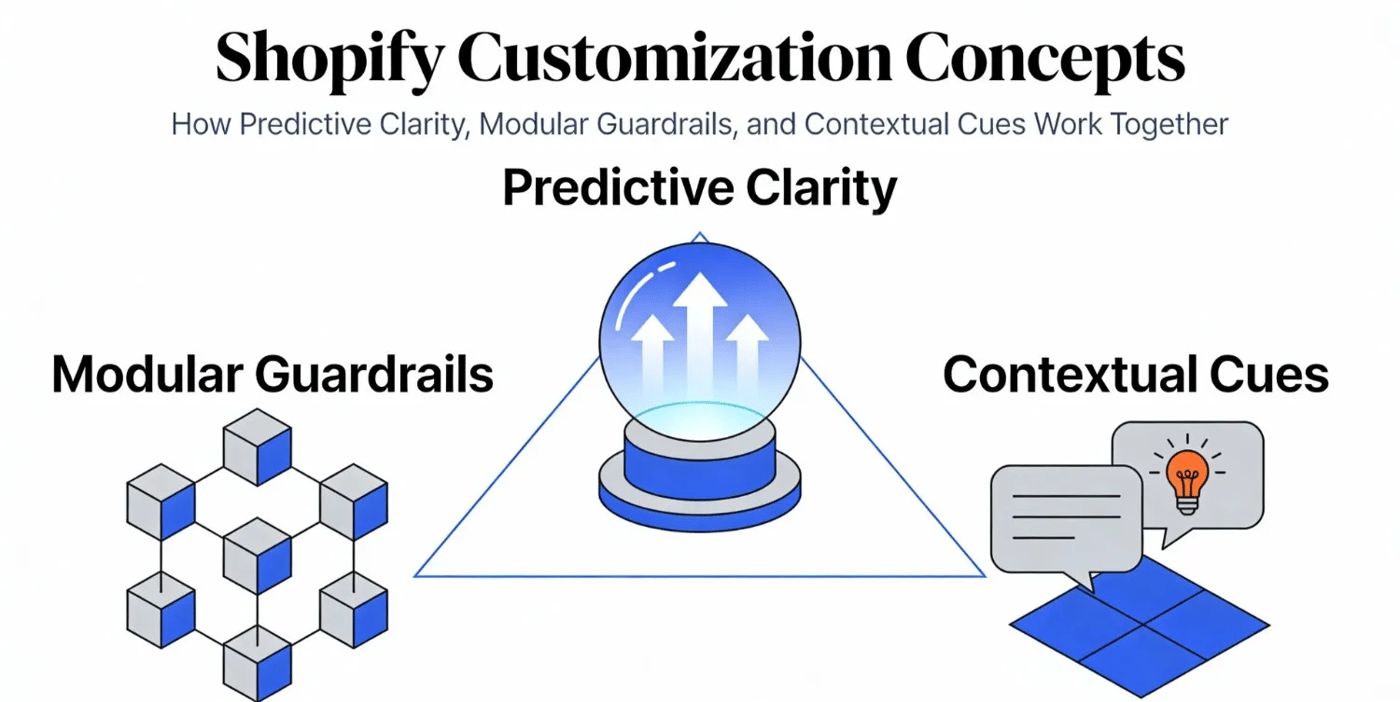
Predictive Clarity
Use AI to not justrecommend, butexplain. Example:
"We’re showing you this hoodie because you viewed the winter collection last week."
This boots your relevance while making customers feel seen — not stalked.
Modular Guardrails
No one likes “out of stock” after hours of custom designing. Avoid heartbreak by automatically excluding items that:
- Aren’t in the shopper’s size
- Are unavailable in stock
- Have already been purchased by them
Contextual Cues
Shift the vibe from “creepy tracking” to “helpful friend” — explain how their preferences shape the experience. Simple cues like “We remembered your size from last time” build comfort.
What should you know about personalization & consumer trust?
Building customer trust requires transparent policies, authentic social proof, secure payment methods, and responsive customer service. Trust signals can increase conversion rates by 15-25% through reduced purchase anxiety. (Source: CRO industry data, 2025)
- Consistency Across Channels: Keep one united shopper profile. If they’re recognized online, they should be recognized in‑store too.
- Value Exchange: With 76% of consumers refusing to buy from companies they don’t trust with their data, you need to openly statewhytheir info matters.
What should you know about impact on conversion rates – the 2026 benchmarks?
This strategy helps businesses optimize customer experience and drive measurable results through targeted improvements. Proper implementation typically shows positive impact within 30-90 days of deployment.
- Up to +212% Lift from personalized experiences.
- +19% Checkout Boost from real‑time customization prices.
- 17% Hesitation with trust badges, clear return policies, verified reviews.
What should you know about legal & transparency requirements: privacy-first personalization?
This strategy helps businesses optimize customer experience and drive measurable results through targeted improvements. Proper implementation typically shows positive impact within 30-90 days of deployment.
- Explicit Customer Consent: No silent data capture — have a tick‑box with clear language.
- Avoid Vague Marketing Claims: “Eco-friendly” is dead; “Made from 100% recycled fibers” keeps you safe.
- Readable Policies: Include short, plain‑language notes next to customization sections with a link to your full policy.
What should you know about shopify system: apps & tools for rule management?
This strategy helps businesses optimize customer experience and drive measurable results through targeted improvements. Proper implementation typically shows positive impact within 30-90 days of deployment.
- Native Customization: Shopify OS 2.0 for clean builds without excessive apps.
- AI Agents: Fast Simon for visual search + predictive “next-best-offer” ranking.
- Social Proof Tools: Okendo/Judge.me for reviews and UGC — boosting conversions by 34%.
What should you know about reducing cart abandonment (still ~69% in 2026)?
This strategy helps businesses optimize customer experience and drive measurable results through targeted improvements. Proper implementation typically shows positive impact within 30-90 days of deployment.
- Real-time Continuity: Use in‑app + push + email flows for double the recovery vs email alone.
- Ease Decisions: Guide your shopper with fit tips & delivery ETAs exactly when doubt creeps in.
- Kill Decision Fatigue: Personalizewithoutoverwhelming — fewer, smarter prompts.
What are the best practices for transparent customization rules?
The "No Surprises" Protocol
Transparency means customers know what’s coming before they click buy.
- changing Delivery Dates: “Estimated Arrival: Oct 12 – Oct 15” beats “Ships in 2‑3 weeks.”
- Visual Confirmation: Always preview their design with “What you see is what you get.”
- Separate Production & Shipping: Avoid confusion by showing both timelines.
Policy Wording Examples Table
| Policy Type | Best For | Recommended Wording |
|---|---|---|
| Strict | Monogrammed/engraved items | "Because this item is made specifically for you, it cannot be returned. Please double-check spelling and options before adding to cart." |
| Moderate | Made-to-order clothing | "We accept returns for quality issues or defects only. Sizing issues cannot be returned as this is sewn to your specific measurements." |
| Trust-First | High-margin custom brands | "We want you to love your custom gear. If it’s not perfect, return it within 30 days for store credit, even if personalized." |
What should you know about ux/ui patterns that seal the deal?
This strategy helps businesses optimize customer experience and drive measurable results through targeted improvements. Proper implementation typically shows positive impact within 30-90 days of deployment.
- Active Consent Checkbox: Above “Add to Cart,” disabled until checked.
- Inline Micro-Copy: Tooltips on risk‑heavy fields (e.g., ring size fit tips).
- Modal Warnings: Pop-ups before closing browser tab — add “Save for Later” option.
What should you know about recommended apps table?
| Category | Top Apps (2026) | Key Feature |
|---|---|---|
| Podifai | Personalized / product customizers | No-code product customizers, brand elevation |
| Delivery Transparency | DingDoong / Flare | Date picker + product-specific lead time |
| Consent & Rules | Terms & Conditions Checkbox Pro | Mandatory tick + timestamp logging |
| Custom Options | Easify / Infinite Options | Help text + disclaimers inline |
| Returns Mgmt | AfterShip Returns | Auto-reject tagged custom SKUs |
What should you know about consumer psychology: the personalization paradox?
This strategy helps businesses optimize customer experience and drive measurable results through targeted improvements. Proper implementation typically shows positive impact within 30-90 days of deployment.
Your job: provide aSafety Net.
- Social Proof: Photo galleries of previous custom orders.
- Mistake Insurance: Let them add “$5 reprint coverage” — lowers fear, lifts conversions.
What should you know about action plan checklist?
- Audit your product pages: Is “Final Sale” visible before checkout?
- Install delivery date apps with exact ranges.
- Refine micro-copy to soften “No Returns.”
- Implement mandatory checkboxes for high-ticket custom items.
What should you know about latest words?
Transparent customization rules aren’t just your legal shield — they’re yourconversion sword. In 2026’s Shopify scene, the winners will be the brands that tell the truth early, guide shoppers gently, and make every click feel safe.
What should you know about podifai: where personalization meets innovation?
AtPodifai, we believe every Shopify merchant should have the power to create engaging, high-converting shopping experiences without technical roadblocks. Our mission is to simplify personalization with sleek, no-code product customizers that elevate your brand and delight your customers. Start your process today and turn festive moments into sales opportunities—because with Podifai, your store’s creativity has no limits.
📚 Related Articles
- Social Proof Personalization for Shopify Custom Products
- Why Real-Time Product Preview Boosts Customer Confidence
- Personalization Ecommerce Strategy Boosts Premium Pricing
- Why A/B Testing Custom Options Is Key to Conversions
Frequently Asked Questions
How long does implementation typically take?
Implementation usually requires 2-6 weeks depending on complexity and customization needs. Proper planning, resource allocation, and phased deployment help ensure smooth rollout and user adoption.
What return on investment can I expect?
Most businesses see positive ROI within 3-6 months through improved conversion rates, increased average order values, and enhanced customer satisfaction. Results vary based on implementation quality and market conditions.
Do I need technical expertise to implement this?
While technical knowledge helps, most modern solutions offer user-friendly interfaces and comprehensive support. Training resources, documentation, and customer success teams ensure successful adoption.
How does this integrate with existing systems?
Integration capabilities include APIs, webhooks, and pre-built connectors for popular platforms. Proper integration planning ensures seamless data flow and maintains operational continuity.
What ongoing maintenance and support is required?
Regular updates, performance monitoring, and optimization ensure continued success. Most solutions provide automated maintenance, analytics dashboards, and dedicated support teams for ongoing assistance.
What specific elements should be transparent in customization?
Essential transparency elements include pricing breakdowns, production timelines, shipping dates, return policies, and customization limitations. Display these prominently during the design process, not hidden in fine print. Clear delivery expectations and visual confirmation features help customers understand exactly what they are buying before checkout.