Social Proof for Custom Products: Boost Sales
How to use reviews, UGC, and testimonials to boost sales of custom Shopify products. Proven social proof personalization strategies.
TL;DR — : Actionable strategies and best practices for e-commerce optimization through data-driven improvements, customer-focused design, and proven growth techniques.
Picture this…
A shopper lands on your store, eyes locked on that gorgeouscustom leather wallet. But then… the hesitation hits. 🤔
What if it doesn't look like the preview? What if colors are off? What if it feels cheap? That's why real-time preview boosts confidence and reduces purchase anxiety.
And here’s where 2026’s game-changer comes in: social proof personalization. For custom and personalized products — wherereturns are tricky and uncertainty is high— social proof isn’t just a nice-to-have. It’s your trust rocket fuel 🚀.
Let’s break it down, step-by-step, so you can turn customers’ doubt into “Shut up and take my money!” moments.
What should you know about social proof strategies for custom products on shopify (2026 trends)?
Product customization can command a 25% price premium for personalized items and reduce returns by up to 40%. It creates emotional connections that drive brand loyalty and repeat purchases. (Source: Deloitte Consumer Review / Harvard Business Review, 2022)
Now, shoppers wantvisual, verifiedproof that you deliver exactly what you promise.
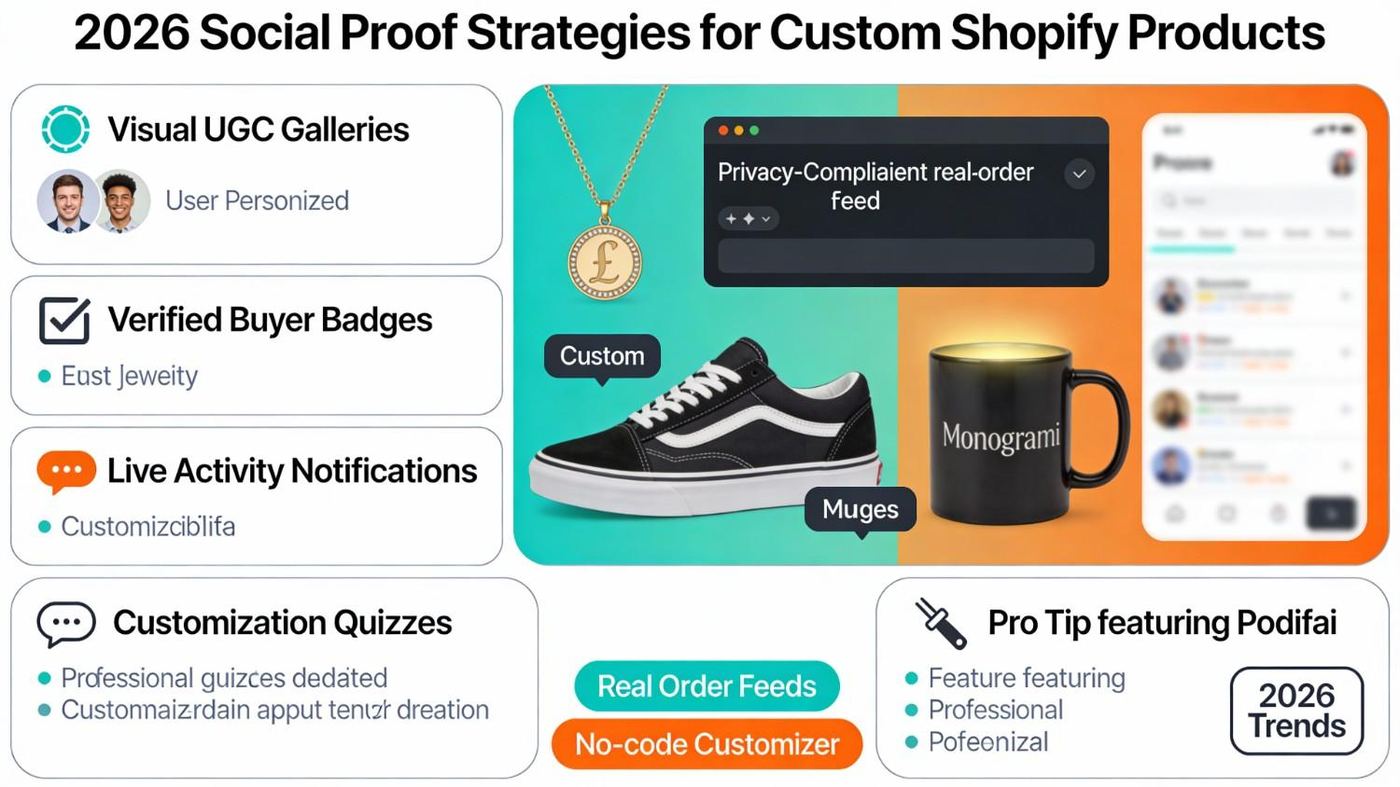
🔥 Key moves for 2026:
- Visual UGC Galleries – Swap plain product pics forReal Orderfeeds showing completed custom items (with sensitive info removed).
- Verified Buyer Badges – Kill skepticism about fake reviews. People notice that extra trust seal.
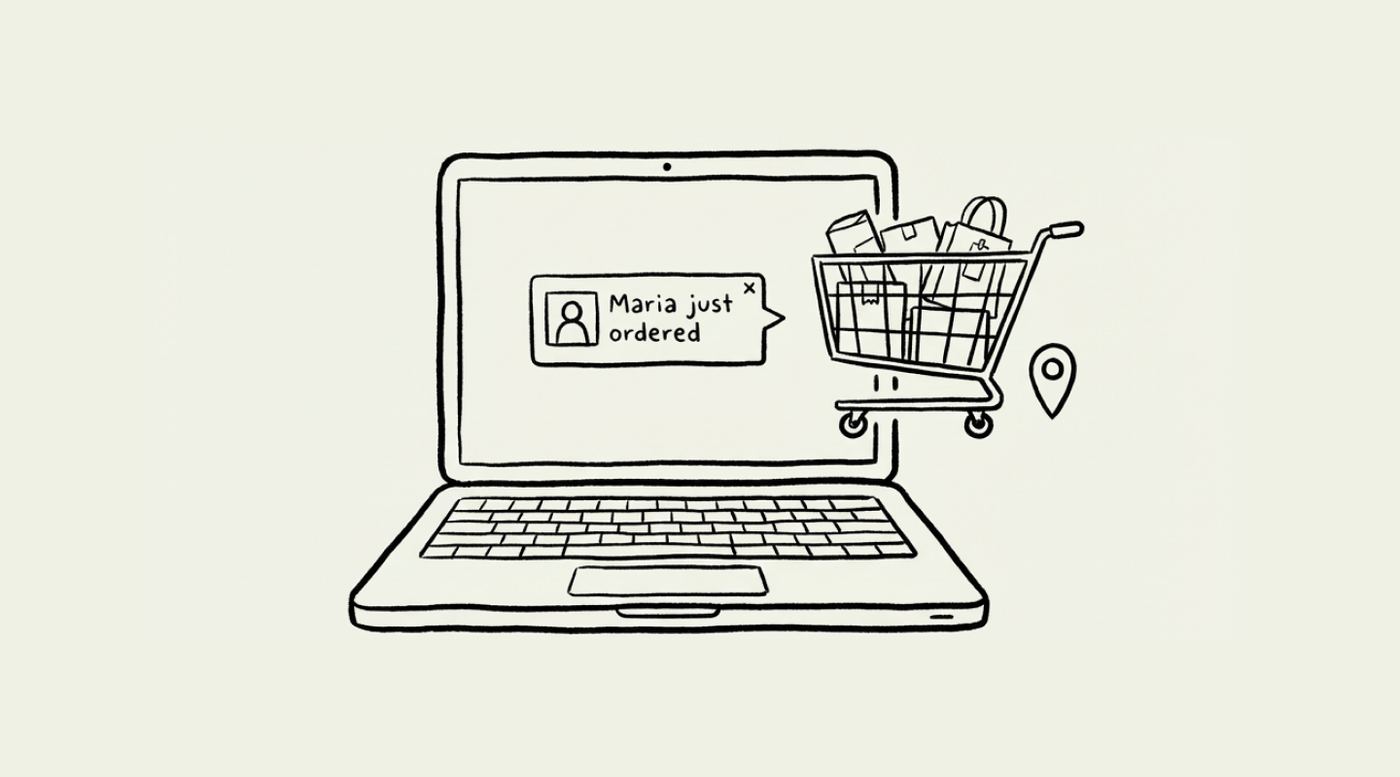
- Live Activity Notifications – “Maria from NYC just ordered a red engraved tumbler” creates urgency while shouting‘people love this!’.
- Customization Quizzes – Smart, quiz-driven pickers that guide choices (and position your store as the customization expert).
💡 Pro Tip: Integrate our toolPodifai— a high-speed, no-code Shopify product customizer — to let customersseetheir personalization as they build it. Text inputs, engravings, image uploads… done in minutes.
What should you know about how reviews influence shopify sales (the numbers don’t lie)?
This strategy helps businesses optimize customer experience and drive measurable results through targeted improvements. Proper implementation typically shows positive impact within 30-90 days of deployment.
The review economy in 2026 is hypercharged — and custom products benefit the most. Tools like review response generator help you engage authentically with customer feedback.
| Data Point | Impact |
|---|---|
| 5+ reviews threshold | Boost purchase likelihood by 3.5x |
| Video testimonials | Increase conversions by 80% over text-only |
| Reviews for high-ticket custom goods | Lift conversions by 380% |
| 99% of shoppers | Check reviews before major purchase |
| 96% of shoppers | Seek negative reviews first to see brand response |
Why?
Because reviews slash risk perception. Especially for personalized items where returns aren’t possible, showing whatothersgot reassures “it’ll work out for me too.”
What are the best ways to use testimonials in personalized marketing?
This strategy helps businesses optimize customer experience and drive measurable results through targeted improvements. Proper implementation typically shows positive impact within 30-90 days of deployment.
- Before/After Framework – “I couldn’t find the right fit.. Until this custom design nailed it.”
- Video Unboxings – Thereveal momentsells your product better than your website ever could.
- Visual-First Placement – Put photo/video reviews above the fold on mobile — zero scrolling needed.
- Multi-Channel Deployment – Drop testimonials into post-purchase emails, paid ads, and right above the “Add to Cart” button.
What should you know about case studies of social proof in e-commerce?
Social proof elements like reviews, testimonials, and user-generated content build credibility and influence purchase decisions. Strategic implementation can increase conversion rates by 15-30% through reduced buyer hesitation. (Source: CRO industry data, 2025)
- Warby Parker – Their “Home Try-On” photo shares turned indecision into viral community feedback.
- Happy Box – Focused onrecipient reactions, making gift-giving feel magical.
- immi Ramen – Built an army of 432 creators, generating $200K via Shopify Collabs.
- Glossier – Leveraged UGC like friendship currency → soaring to $1.2B valuation.
Why should you user-generated content is the trust bridge for custom products?
Product customization can command a 25% price premium for personalized items and reduce returns by up to 40%. It creates emotional connections that drive brand loyalty and repeat purchases. (Source: Deloitte Consumer Review / Harvard Business Review, 2022)
UGC closes it instantly.
Benefits:
- Cuts cart abandonment by 2.5%
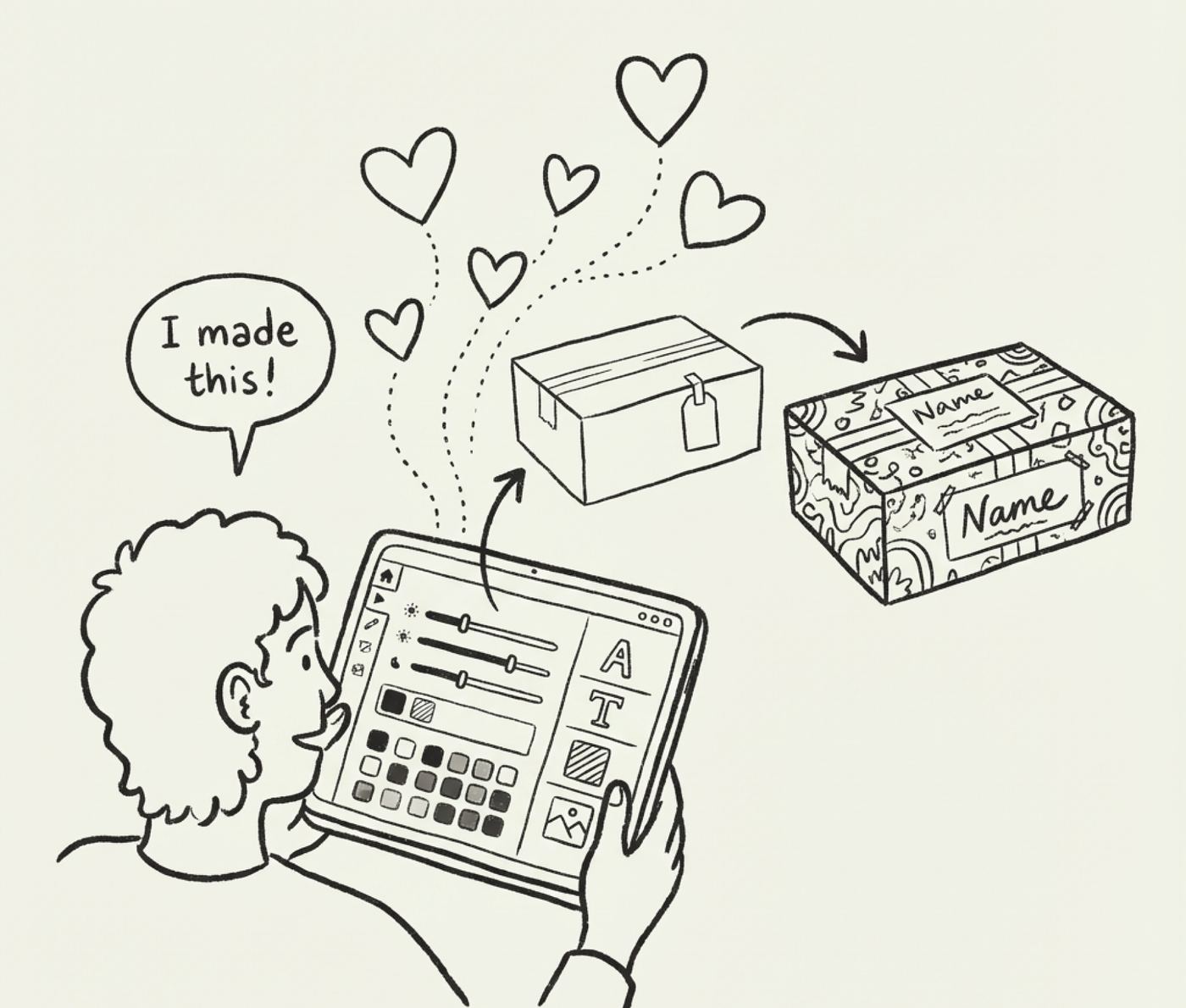
- Drives 2x higher engagement when customers show off “I made this” moments
- Normalizes purchase throughcommunity validation
💬 Quote:“Seeing someone else’s custom guitar made me trust they’d nail mine too.”
What should you know about influencer strategy: micro beats mega?
This strategy helps businesses optimize customer experience and drive measurable results through targeted improvements. Proper implementation typically shows positive impact within 30-90 days of deployment.
- Niche audience = higher trust
- Long-term ambassadorships > one-off posts
- Whitelisted ads from influencer accounts = 30–70% cheaper views
What should you know about psychology behind social proof in custom shopping?
Social proof elements like reviews, testimonials, and user-generated content build credibility and influence purchase decisions. Strategic implementation can increase conversion rates by 15-30% through reduced buyer hesitation. (Source: CRO industry data, 2025)
- Regret Aversion – “If others tried and loved it, I won’t regret my choice.”
- Bandwagon Effect – Live sale popups signal popularity.
- Similarity Bias – Seeing reviewers ‘like me’ makes decisions easier.
What should you know about tools & plugins for review integration (2026 top picks)?
| Tool | Best For |
|---|---|
| Loox | Visual-first photo/video reviews |
| Judge.me | Fast, free SEO-snippet rich ratings |
| Okendo | Attribute-based ratings (“Material Quality”, “Comfort”) |
| Yotpo | Enterprise SMS + loyalty + AI-sentiment reviews |
| Growave | All-in-one loyalty, wishlist, & reviews |
What should you know about ethics in 2026: keep it real?
This strategy helps businesses optimize customer experience and drive measurable results through targeted improvements. Proper implementation typically shows positive impact within 30-90 days of deployment.
Stay clean:
- Label incentivized reviews clearly.
- Never censor negatives — 62% avoid brands that do.
- Respect privacy in order photo shares.
What should you know about podifai: your secret weapon for custom product social proof?
Product customization can command a 25% price premium for personalized items and reduce returns by up to 40%. It creates emotional connections that drive brand loyalty and repeat purchases. (Source: Deloitte Consumer Review / Harvard Business Review, 2022)
Podifai lets Shopify merchants set engraving, text input, and image upload options without coding. Pair it with UGC streams, photo review plugins, and micro-influencer campaigns… and you’ve got a conversion machine.
Latest Words:
Social proof isn’t magic dust — but when you combine visual UGC, credible testimonials, and smart influencer partnerships with a real-time customization tool like Podifai, you make buying a custom product feel as safe as ordering a regular t-shirt.
Frequently Asked Questions
How long does implementation typically take?
Implementation usually requires 2-6 weeks depending on complexity and customization needs. Proper planning, resource allocation, and phased deployment help ensure smooth rollout and user adoption.
What return on investment can I expect?
Most businesses see positive ROI within 3-6 months through improved conversion rates, increased average order values, and enhanced customer satisfaction. Results vary based on implementation quality and market conditions.
Do I need technical expertise to implement this?
While technical knowledge helps, most modern solutions offer user-friendly interfaces and comprehensive support. Training resources, documentation, and customer success teams ensure successful adoption.
How does this integrate with existing systems?
Integration capabilities include APIs, webhooks, and pre-built connectors for popular platforms. Proper integration planning ensures seamless data flow and maintains operational continuity.
What ongoing maintenance and support is required?
Regular updates, performance monitoring, and optimization ensure continued success. Most solutions provide automated maintenance, analytics dashboards, and dedicated support teams for ongoing assistance.
Frequently Asked Questions
How do I collect and showcase user-generated content effectively?
Create branded hashtags, offer incentives for photo submissions, and actively engage with customers who share your products. Use tools like Olapic or Pixlee to aggregate UGC automatically. Feature customer photos on product pages, showing real people using customized items to build authenticity and trust with potential buyers.
What types of social proof work best for custom products?
Customer photos of personalized items, detailed reviews mentioning customization quality, testimonials about gift-giving experiences, and real-time purchase notifications work exceptionally well. Before-and-after customization stories and video testimonials showing the unboxing experience create powerful emotional connections with prospects.
How can I automate social proof without compromising authenticity?
Use apps like Fomo or TrustPulse to display real purchase activity while maintaining genuine customer data. Set up automated review request sequences post-purchase, and create social media monitoring to catch organic mentions. Always use real customer names and locations while respecting privacy preferences and avoiding fake or manipulated content.
Where should I place social proof for maximum impact?
Strategic placement includes product pages near Add to Cart buttons, checkout pages to reduce abandonment, homepage hero sections, and email marketing campaigns. Mobile optimization is crucial since 60%+ of traffic comes from mobile devices. Test different positions and formats to find what resonates best with your specific audience. (Source: Artzen, 2025)
How do I measure the effectiveness of social proof campaigns?
Track conversion rate improvements, time spent on product pages, cart abandonment reduction, and customer lifetime value increases. Use A/B testing to compare pages with and without social proof elements. Monitor engagement metrics on social proof content and survey customers about trust factors that influenced their purchase decisions.