Why Shoppers Pay More for Custom Products
The psychology behind why shoppers pay 20-50% more for personalized products. Research-backed insights for Shopify store owners.
TL;DR — : Personalization psychology taps into deep human needs for ownership, uniqueness, and self-expression. The IKEA Effect makes customers value what they create, while emotional drivers like identity validation and anticipatory excitement fuel purchasing decisions. This comprehensive guide reveals why personalized products command 20-50% price premiums and how neuroscience explains our brain chemistry reaction to customization.
You’ve seen it. You’ve probably done it. That thrill of slapping your name on a hoodie, designing your own sneakers, or curating theperfectplaylist — that’s personalization psychology at work. And in eCommerce? It’s turning ordinary items into emotional treasures… with price tags shoppers are happy to pay.
Welcome to the future of shopping — where "add to cart" is now "co-create with me."
The Psychology of Personalized Products in E-Commerce
Personalization isn’t just a marketing trend — it’s a deep, brain-levelneedthat taps into identity, ownership, and human emotion.
When shoppers customize, they're not just buying… they’rebuilding. And that makes all the difference.
The IKEA Effect in Action
People love what they create. That’s why assembling flat-pack furniture makes you weirdly proud of it, even if the screws are slightly off. In eCommerce, every click in the product design tool adds perceived value.
Psychological Ownership
Making choices about size, colors, engravings… it creates a feeling of “this is mine” long before the product arrives. That emotional link boosts satisfaction — and keeps carts from being abandoned.
Self-Expression
In a copy-paste mass market, customized products say:I’m unique.From a T-shirt with your pet’s face to a mug with an inside joke, it’s part statement piece, part identity badge.
Why Shoppers Pay More for Customized Items
Personalized products can support premium pricing because the shopper is buying fit, identity, and gift relevance, not only the base item. For the margin strategy behind this, see how product personalization protects premium pricing.
Why?
- Effort Justification – When you spend time on a design, your brain rewards you.
- Perceived Scarcity – Your custom tumbler is literally “a market of one.”
- Gift Value Premium – Emotional impact outweighs cost in gifting scenarios.
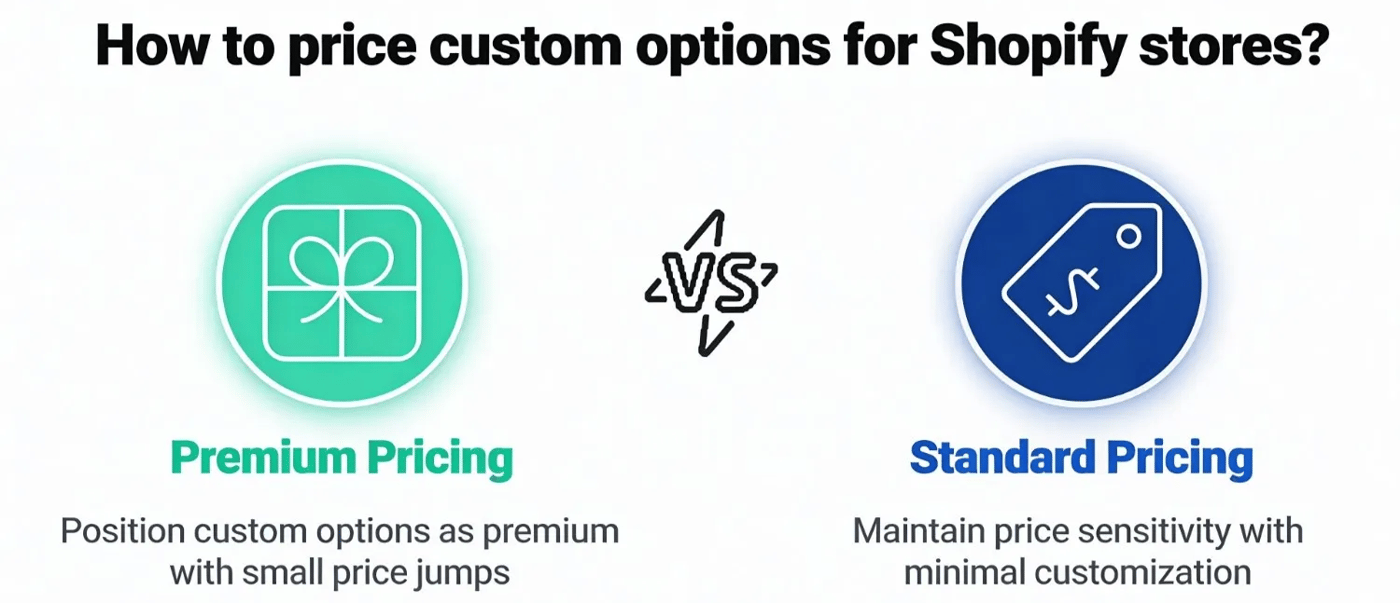
💡Pro Tip for Shopify owners:Position custom options as premium — but with small price jumps. This closes the gap between “just looking” and “wow, I’m buying this”.
Shopify Personalization Behavior in 2025
Shopify data is crystal clear: personalization isn’t optional anymore.
- 81% prefer brands offering personalized experiences
- 71% say it’s nowtable stakes
- 65% will jump ship for better personalization
- 80% want it, but 65% will leave if they feel lied to about data use
Print-on-demand apparel (tees, hoodies) is still king, but trust is the crown jewel. If customers don’t feel safe with how you collect and use data, no amount of custom design will save loyalty.
Emotional Drivers Behind Customized Buying
Behind every “Buy” button, there’s a brain running the show.
- Need for Uniqueness – Stand out in a commoditized sea.
- Identity Validation – See your tastes celebrated, like Spotify Wrapped.
- Anticipatory Excitement – Waiting for a personalized item feels like waiting for your birthday present.
- Trust & Safety – Your name in the design or checkout process feels comforting.
That’s why custom products tend to have lower return rates — peopleknowwhat they’re getting and already feel attached.
📢 Shopify Fact: Custom orders often cut returns by 40%. (Source: Harvard Business Review, 2022)
Neuroscience: Why Your Brain Loves Personalized Items
This is hardwired stuff — personalization fires up dopamine in your brain’s reward system.
- Dopamine Surges during creation and purchase.
- Limbic System reads emotional signals faster than specs, so “I love this” beats “It’s durable.”
- Cognitive Fluency makes familiar, tailored products easier to process — which speeds decision-making.
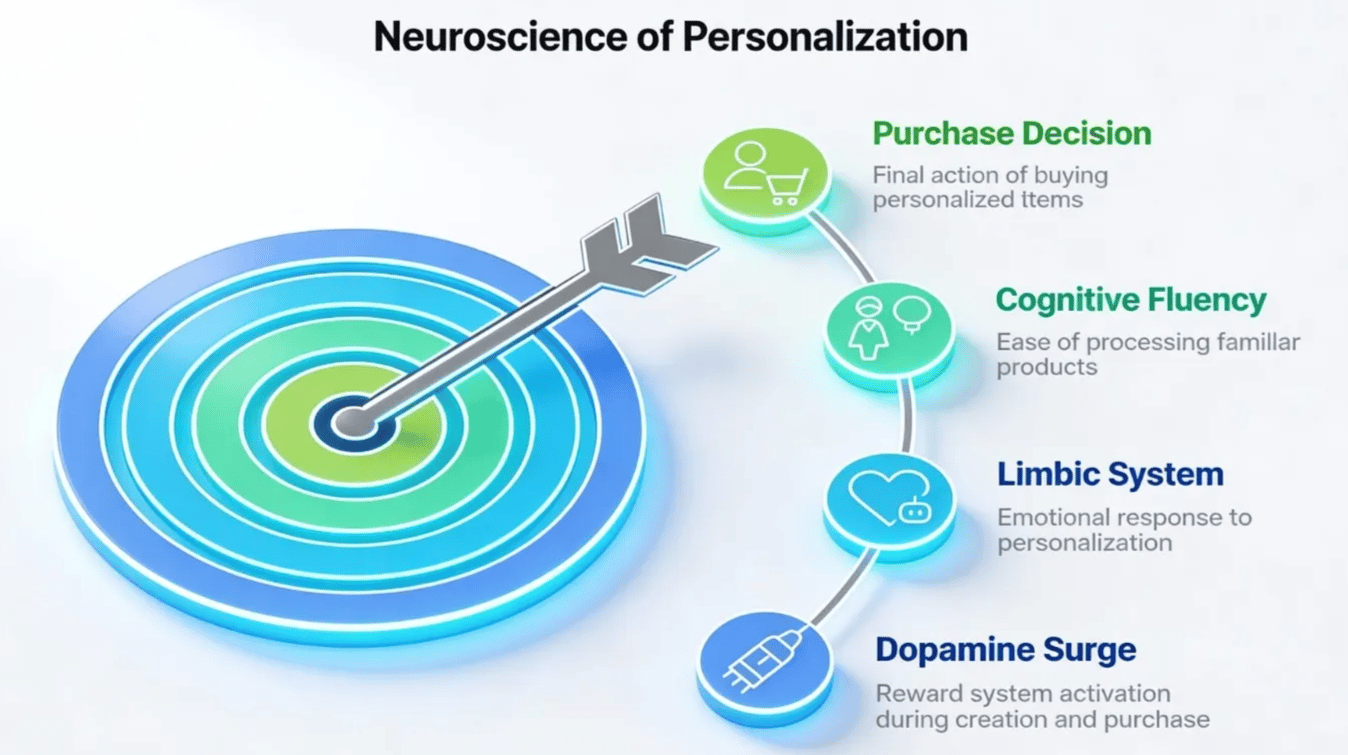
Have you ever clicked “Add to Cart” faster when the item feels likeit was made for you? That’s cognitive fluency in play.
E-Commerce Trends 2026: Personalization 3.0
Get ready for hyper-personalization powered by AI.
✅ Predictive Personalization – AI knows your needsbeforeyou search.
✅ Privacy-First Data – Voluntary ("zero-party") data sharing.
✅ Omnichannel Continuity – Your cart, preferences, and custom designs follow you everywhere — mobile, desktop, in-store.
✅ Co-Creation with GenAI – Type “neon cyberpunk dragon NFT print” and get an instant product mock-up.
For Shopify owners, this means the storefront will never look the same for any two people.
Case Studies That Prove the Power of Personalization
💬Nike By You: Tripled online sales once customers could design sneakers.
💬Amazon: 35% of sales come from personalized recommendations. (Source: McKinsey & Company, 2019)
💬Wiivv: Doubled orders year-over-year for 3D printed insoles.
Design-your-own tools can improve conversion quality when they reduce uncertainty and make the finished product easier to imagine. Merchants should track conversion rate, return rate, and average order value before treating any customization uplift as durable.
Boosting Sales with Creative Customization Strategies
Want to upsell without scaring customers? A well-designed product configurator makes it easy. Try:
- The Decoy Effect
- Goldilocks Rule – Offer three customization tiers; aim for middle-range profit sweet spot.
- Tiered Upsells – Start simple, then offer additional customization mid-checkout.
Benefits for Shopify Store Owners
🛍 Reduced Returns – Custom means fewer disappointments.
📈 Personalization helps increase your store's average order value through high-margin upsells and customization options.
🛡 Market Defense – Differentiates from Amazon & Temu.
Higher conversions - real-time product preview can help shoppers confirm names, colors, uploads, and layout choices before checkout. Treat it as a confidence-building UX layer, then measure impact against your own baseline.
Quote to remember:
“In a world of sameness, personalization is the currency of loyalty.”
Latest words
If you’re a Shopify store owner, this isn’t just atrend watch. It’s survival. Personalization psychology makes customers happier, more loyal, and more willing to spend. The emotional, economic, and neural proofs are all there.
So go ahead… let them co-create. Let them feel ownership. And watch your products stop being “items” and start being “treasures.”
💡 Quick Quiz – Drop your answers in the comments
- What’s the IKEA Effect, and why does it raise perceived value?
- Why do personalized products often have a lower return rate?
- Name one emotional driver behind personalization psychology.
PODIFAI: WHERE PERSONALIZATION MEETS INNOVATION
AtPodifai, we believe every Shopify merchant should have the power to create engaging, high-converting shopping experiences without technical roadblocks. Our mission is to simplify personalization with sleek, no-code product customizers that elevate your brand and delight your customers. Start your process today and turn festive moments into sales opportunities—because with Podifai, your store’s creativity has no limits.
📚 Related Articles
- Personalization Ecommerce Strategy Boosts Premium Pricing
- Social Proof Personalization for Shopify Custom Products
- 7 Ways Personalization Can Increase Your Shopify Store's Average Order Value
- Why Real-Time Product Preview Boosts Customer Confidence
Frequently Asked Questions
What is the IKEA Effect and how does it apply to e-commerce?
The IKEA Effect is a cognitive bias where people place higher value on products they partially created or assembled. In e-commerce, this means customers who customize products through design tools, color selection, or personalization options develop stronger emotional attachment and perceive greater value. This effect directly increases willingness to pay premium prices and reduces return rates significantly.
Why do personalized products command higher prices?
Personalized products trigger psychological ownership, effort justification, and perceived scarcity. When customers invest time and creativity in product customization, their brains release dopamine and create emotional attachment that weakens price sensitivity. The uniqueness factor makes direct price comparisons impossible, allowing merchants to command 20-50% premium pricing for customized items. (Source: Deloitte, 2015)
How does neuroscience explain personalization psychology?
Brain imaging shows that personalization activates the dopamine reward system during creation and purchase. The limbic system processes emotional signals faster than rational specifications, making customers say I love this before evaluating durability or features. Cognitive fluency makes familiar, tailored products easier to process mentally, accelerating decision-making and reducing purchase hesitation.
What are the main emotional drivers behind customized purchases?
Key emotional drivers include need for uniqueness in mass markets, identity validation through self-expression, anticipatory excitement while waiting for custom items, and trust building through personalized shopping experiences. These drivers create psychological ownership before purchase completion, making customers feel products belong to them before they even arrive, significantly boosting satisfaction and loyalty.
How can Shopify stores implement personalization psychology effectively?
Start with simple customization options like color and text personalization, then gradually add advanced features. Use real-time product previews to trigger cognitive fluency, implement tiered customization levels using the Goldilocks Rule, and ensure transparent data usage to maintain trust. Position custom options as premium experiences with modest price increases to maximize conversion without sticker shock.