A/B Testing Customization Options (Guide)
How to A/B test different personalization options on your Shopify store to find the combinations that maximize conversions.
TL;DR — : Strategic guide to product customization implementation that increases customer engagement, boosts average order values, and creates competitive differentiation in crowded markets.
The Game Has Changed — And Your Shopify Store Needs to Catch Up
Let's be real — gone are the days when just adding a recommended items section could move your sales needle. Fast forward to 2026, and the ecommerce arena looks completely different. AI-driven hyper-personalization, Agentic Commerce, and next-gen A/B test ad creative generator tools aren't just nice-to-have, they're survival kits.
Shopify merchants now have two audiences to convert: the human buyerandthe AI agent that’s guiding them. If you want to improve conversion rate Shopify style, it’s time to embrace SimGym, Shopify Rollouts, and product customization that makes every shopper feel like the store was built just for them.
What should you know about shopify conversion rate optimization in 2026?
This strategy helps businesses optimize customer experience and drive measurable results through targeted improvements. Proper implementation typically shows positive impact within 30-90 days of deployment.
- AI-driven hyper-personalization that tailors hero banners, calls-to-action (CTAs), and content based on real-time sources, customer history, and geolocation.
- Advanced A/B testing right inside Shopify to tweak prices, shipping thresholds, and UX without chunking traffic into risky experiments.
Ecommerce Conversion Rate Benchmarks for 2026:
| Vertical | Avg CVR (2026) | Top Performer CVR | Why They Win |
|---|---|---|---|
| General Ecommerce | 1.5% – 2.5% | 4.5%+ | Hyper-personalized homepages |
| Food & Beverage | 4.0% – 6.0% | 10%+ | Subscription + easy reorders |
| Beauty & Skincare | 3.0% – 5.0% | 8%+ | AR try-on + quiz funnels |
| Electronics | 1.5% – 2.0% | 3.5% | Detailed spec comparison |
| Apparel | 1.8% – 2.2% | 4.0% | Size guides, complete look bundles |
Pro Insight: Stores using 3D/AR product configuration are seeing 40% higher conversion rates over static images. (Source: PureWeb / Forbes, 2024)
What should you know about the "agentic commerce" revolution?
Imagine this — a shopper’s intelligent AI assistant has already scanned 50 options and brings them to your Shopify storeonlyif it knows your products match their vibe, budget, and delivery needs. This is the Agentic Commerce reality.
Two Shopify-native tools are leading the pack:
- SimGym:Lets you run thousands of simulated shopper sessions with AI agents before live traffic hits your store. Think "dress rehearsal" before opening night.
- Shopify Rollouts:Embedded directly in Shopify Admin, lets you split-release changes to small traffic percentages before going all-in.
What should you know about 2026’s shopify a/b testing playbook?
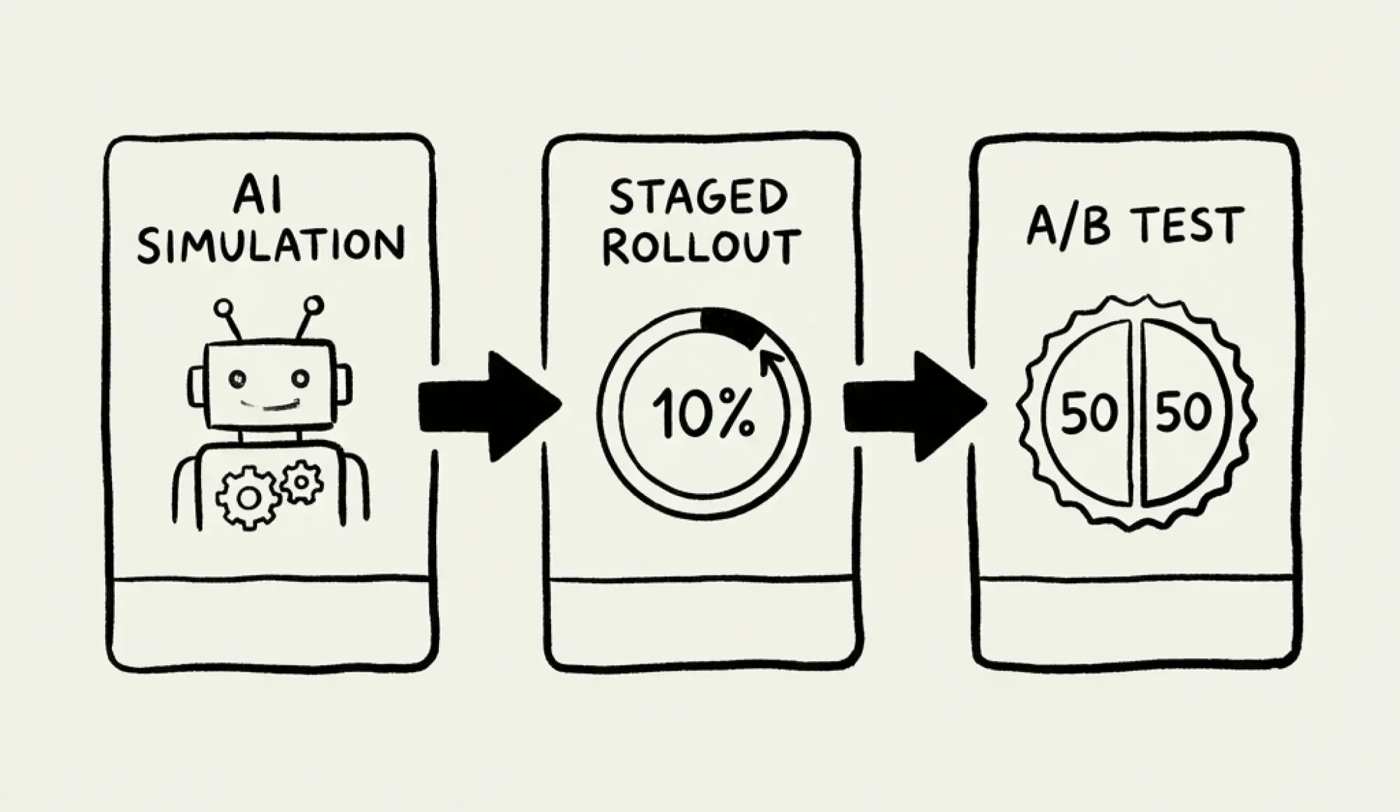
Here’s how smart merchants are doing it — the 3-Phase Validation Method:
Phase 1: AI Simulation
Run design changes in SimGym. If AI agents get stuck at checkout, fix UX immediately.
Phase 2: Staged Rollouts
Send changes to 10% of audience, watch for technical issues.
Phase 3: Statistical A/B Test
When everything’s smooth, do a 50/50 split and measure with key metrics like RPV.
Why should you customization is conversion gold?
This strategy helps businesses optimize customer experience and drive measurable results through targeted improvements. Proper implementation typically shows positive impact within 30-90 days of deployment.
Data Says:
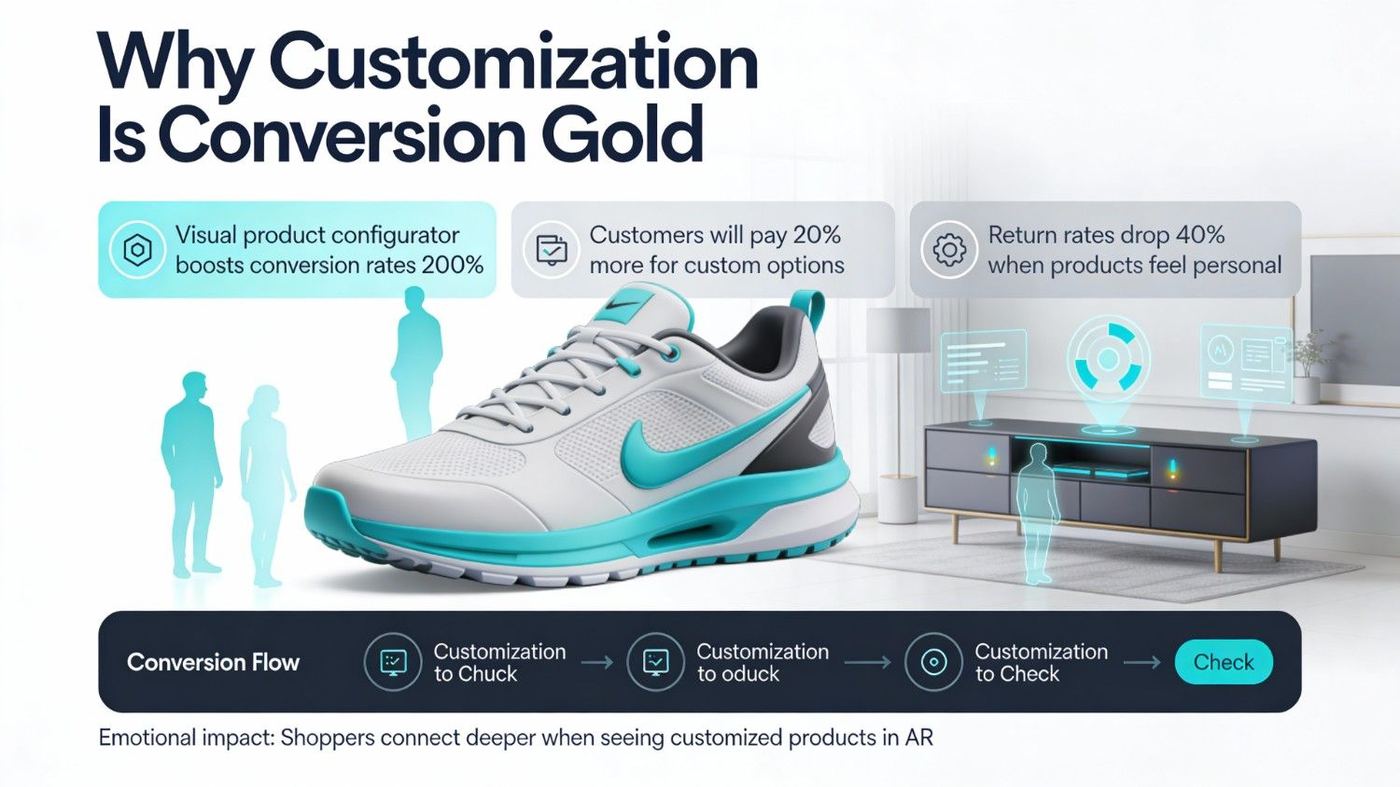
- Visual product configurator boosts conversion rates 200% compared to old-school drop-down menus.
- Customers will pay 20% more for custom options.
- Return rates drop 40% when products feel personal.
Imagine embedding Kickflip or Zakeke to let shoppers see sneakers they design, or furniture they’ve styled in their room using AR. That’s emotional buy-inbeforecheckout.
What are the best tools to improve conversion rate on shopify (2026 edition)?
This strategy helps businesses optimize customer experience and drive measurable results through targeted improvements. Proper implementation typically shows positive impact within 30-90 days of deployment.
- Shopify Rollouts – Native, free, great for big changes.
- Intelligems – Price + shipping threshold testing.
- VWO / Convert.com – Enterprise-level experimentation with deep analytics.
- OptiMonk – Micro-interaction testing like sticky bars.
Customization Champions:
Personalized / product customizers
No-code product customizers, brand elevation
How to measure your cro wins in 2026?
This strategy helps businesses optimize customer experience and drive measurable results through targeted improvements. Proper implementation typically shows positive impact within 30-90 days of deployment.
- Revenue Per Visitor (RPV) – The ultimate ROI truth bomb.
- Profit Per Visitor – Avoid the trap of sales that kill margins.
- Simulated Success Rate (SSR) – Pre-live success predictions from AI agent data.
- Micro-Conversions – Add-to-cart, checkout start to spot funnel blockages.
🎯 Podifai’s Actionable 2026 Checkpoints
- Start every new feature with a SimGym AI test.
- Show customization visually — no text-only menus.
- A/B test your upsell pricing ($5 vs $10 engraving) with Intelligems.
- Structure product data so AI assistants can read key info without multiple clicks (Zero-Click Commerce).
What should you know about latest words:?
In 2026, Shopify conversion rate optimization isn't about tinkering with a button color. It's about speaking the language of both humans and AI, making every visit feel like it was made exclusively for that shopper. Personalization increases AOV and creates memorable experiences — whether it's a dreamy AR furniture preview, or the perfect custom bike.
So — if your store can't pass the AI gatekeeper test, or still relies on static inventory images, you're playing yesterday's game. Use a product options planner, bring in the AI sims, roll out smart, and make customization irresistible.
What should you know about podifai: where personalization meets innovation?
AtPodifai, we believe every Shopify merchant should have the power to create engaging, high-converting shopping experiences without technical roadblocks. Our mission is to simplify personalization with sleek, no-code product customizers that elevate your brand and delight your customers. Start your process today and turn festive moments into sales opportunities—because with Podifai, your store’s creativity has no limits.
Frequently Asked Questions
How long does implementation typically take?
Implementation usually requires 2-6 weeks depending on complexity and customization needs. Proper planning, resource allocation, and phased deployment help ensure smooth rollout and user adoption.
What return on investment can I expect?
Most businesses see positive ROI within 3-6 months through improved conversion rates, increased average order values, and enhanced customer satisfaction. Results vary based on implementation quality and market conditions.
Do I need technical expertise to implement this?
While technical knowledge helps, most modern solutions offer user-friendly interfaces and comprehensive support. Training resources, documentation, and customer success teams ensure successful adoption.
How does this integrate with existing systems?
Integration capabilities include APIs, webhooks, and pre-built connectors for popular platforms. Proper integration planning ensures seamless data flow and maintains operational continuity.
What ongoing maintenance and support is required?
Regular updates, performance monitoring, and optimization ensure continued success. Most solutions provide automated maintenance, analytics dashboards, and dedicated support teams for ongoing assistance.
Frequently Asked Questions
How long should I run A/B tests for custom options?
Run tests for minimum 2-4 weeks to account for weekly behavior patterns and seasonal variations. Ensure you reach statistical significance with at least 100 conversions per variant before making decisions. Higher-traffic sites may achieve significance faster, while lower-traffic sites may need longer test periods to gather meaningful data.
What elements should I test first when optimizing custom options?
Start with high-impact elements: option order and grouping, pricing display format, mobile user interface, and choice architecture. Test simplified vs. detailed option layouts, progressive disclosure vs. all-options-visible, and different visual presentation styles. Focus on elements that directly affect the purchase decision rather than minor aesthetic changes.
How do I handle multiple custom options in A/B tests?
Test one variable at a time to isolate impact, or use multivariate testing for complex scenarios. Group related options together when testing choice architecture. Consider the interaction between options - changing one may affect how customers perceive others. Use progressive testing to validate individual changes before combining successful variations.
What metrics should I track beyond conversion rate?
Monitor average order value, time spent on customization, option selection patterns, cart abandonment at specific steps, mobile vs desktop performance, and customer satisfaction scores. Track completion rates for each customization step and identify where customers drop off most frequently to optimize the entire flow.
How do I ensure mobile optimization in custom option testing?
Test mobile-specific layouts separately from desktop versions since user behavior differs significantly. Focus on touch-friendly elements, simplified choice presentation, and thumb-navigation patterns. Test loading speeds, image quality on smaller screens, and ensure customization previews are clearly visible on mobile devices without requiring zoom or scroll.